




THE INTEGRATED SOFTWARE ENVIRONMENT FOR BCI & NEUROTECHNOLOGY
Acquire biosignals, process data in real time, record experiments, analyze results and develop custom neuroscience applications within one integrated software ecosystem.
g.tec Suite 2024 provides the software foundation for working with g.tec biosignal acquisition and stimulation systems. It includes g.NEEDaccess and its developer APIs, Montage Creator, data conversion and centralized software management, and can be extended with g.HIsys, g.Recorder and g.BSanalyze through additional software licenses.
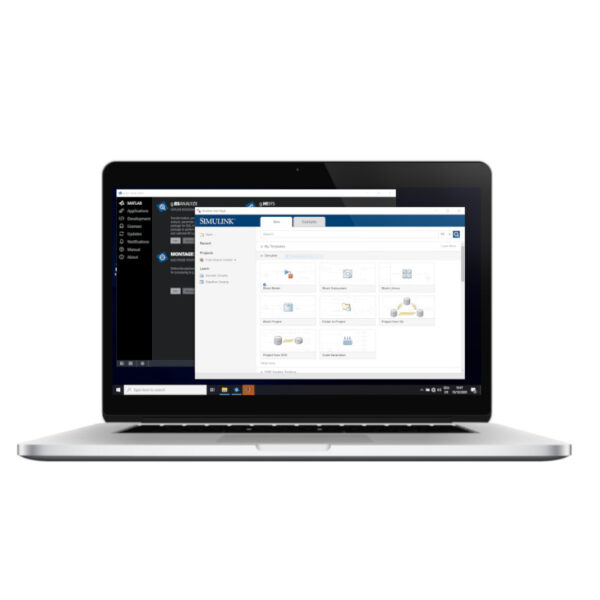
Develop custom applications through Python, MATLAB, C and .NET APIs, acquire data locally or across a network, build real-time Simulink applications, record and review biosignals, and continue with advanced offline analysis. The Suite also centralizes software licenses, updates, notifications and system diagnostics, helping researchers manage the complete g.tec software environment from one place.
| Complete Neuroscience Software Ecosystem | Connect biosignal acquisition, real-time processing, recording, offline analysis and custom application development |
| Real-Time BCI & Closed-Loop Development | Build real-time processing, classification, feedback and stimulation applications with g.HIsys |
| Biosignal Recording & Review | Acquire, visualize, record and review EEG, ECoG and other biosignals with g.Recorder |
| Advanced Offline Analysis | Preprocess, analyze, classify and visualize recorded biosignals with g.BSanalyze |
| Developer APIs | Develop custom applications using Python, MATLAB, C, .NET and network interfaces through g.NEEDaccess |
| Network & Multi-Device Acquisition | Acquire data from multiple devices and provide one acquisition to multiple clients through g.NEEDaccess |
| EEG, ECoG & sEEG Montage Creation | Define electrode positions and create 2D/3D montages for source derivations and topographic mapping |
| Stimulation Integration | Integrate compatible g.Estim FES and g.Estim PRO systems into experimental workflows |
| Data Conversion | Convert g.Recorder HDF5 and MATLAB recordings to EDF, GDF and GDF24 |
| Central Software Management | Manage software licenses, updates, notifications and system diagnostics from the g.tec Suite 2024 |
| Software Environment | Integrated environment for g.tec neuroscience software, applications, APIs and software management |
| Core Suite Functionality | g.NEEDaccess Server, Python, MATLAB, C, .NET & Network APIs, Montage Creator, Data Conversion, Stimulation Interfaces, License & Update Management, System Diagnostics |
| Optional Licensed Software Packages | g.HIsys Basic/Professional, g.Recorder Basic/Professional, g.BSanalyze |
| g.HIsys Editions | BASIC and PROFESSIONAL |
| g.Recorder Editions | BASIC and PROFESSIONAL |
| Developer Interfaces | Python, MATLAB, C, .NET and Network API |
| Supported Biosignal Systems | g.HIamp, g.USBamp, g.Nautilus and supported g.tec devices according to the individual software package |
| Biosignals | EEG, ECoG, ECG, EMG, EOG and other supported biosignals |
| Real-Time Processing | g.HIsys with MATLAB/Simulink |
| Recording & Review | g.Recorder |
| Offline Analysis | g.BSanalyze |
| Network Acquisition | g.NEEDaccess Server with multi-device, remote and multi-client acquisition |
| Electrode Montage Tools | Montage Creator, iEEG Montage Creator and g.Pangolin Montage Creator |
| Stimulation Integration | g.Estim FES, g.Estim PRO and g.Estim PRO Switching Unit |
| Data Conversion | HDF5/MATLAB to EDF, GDF and GDF24 |
| Software Management | License activation, software updates, notifications and system diagnostics |
| Operating Environment | Windows-based; individual software packages may require additional MATLAB/Simulink components |

ONE SOFTWARE ECOSYSTEM. THE COMPLETE RESEARCH WORKFLOW
From accessing biosignal data to building real-time applications and analyzing experimental results, g.tec Suite 2024 connects the complete neuroscience research workflow in one integrated software environment.
g.NEEDaccess, g.HIsys, g.Recorder and g.BSanalyze work together across acquisition, processing, recording and analysis, while the Montage Creator provides the electrode information required for spatial visualization and mapping.

ACCESS AND DEVELOP WITH g.NEEDACCESS
Build your own biosignal acquisition and neurotechnology applications without handling low-level device communication. g.NEEDaccess is included with g.tec Suite 2024, together with its Python, MATLAB, C, .NET and Network APIs, giving researchers and developers a ready-to-use foundation for custom application development. The Suite documentation lists the acquisition server, APIs and demo code among the core Suite components.
g.NEEDaccess provides platform-independent access to g.HIamp, g.Nautilus and g.USBamp and supports data acquisition from multiple devices through direct or network connections. The server handles device communication, acquisition and preprocessing, providing biosignal data ready for further processing and analysis.
Develop custom applications using Python, MATLAB, C and .NET, or use the Network API for remote and distributed acquisition. Biosignal data can be acquired on a different computer from the one connected to the device, while a single acquisition can be made available simultaneously to multiple clients for real-time monitoring and processing.
This makes g.NEEDaccess the development and connectivity layer included with g.tec Suite 2024. If you only need direct access to g.tec hardware for your own software development, no additional g.HIsys, g.Recorder or g.BSanalyze package is required; these can be added separately when real-time processing, dedicated recording or advanced offline analysis is needed.
ACQUIRE & PROCESS IN REAL TIME WITH g.HISYS
Transform incoming biosignals into real-time neuroscience applications with MATLAB and Simulink. g.HIsys combines biosignal acquisition, preprocessing, feature extraction, classification and visualization in a flexible real-time processing environment. Build BCIs, multimodal experiments and closed-loop applications that use brain and physiological signals to generate feedback, control external devices or interact with compatible stimulation systems.
g.HIsys Professional extends the environment with dedicated tools for P300, SSVEP and motor imagery BCIs, evoked potentials, TMS, fNIRS, eye tracking, hyperscanning, neuromodulation, ECoG and CCEP workflows, LSL and distributed EEG. OSCAR LIVE, included with g.HIsys Professional, provides real-time artifact correction directly within the processing workflow.


ANALYZE BIOSIGNALS OFFLINE WITH g.BSANALYZE
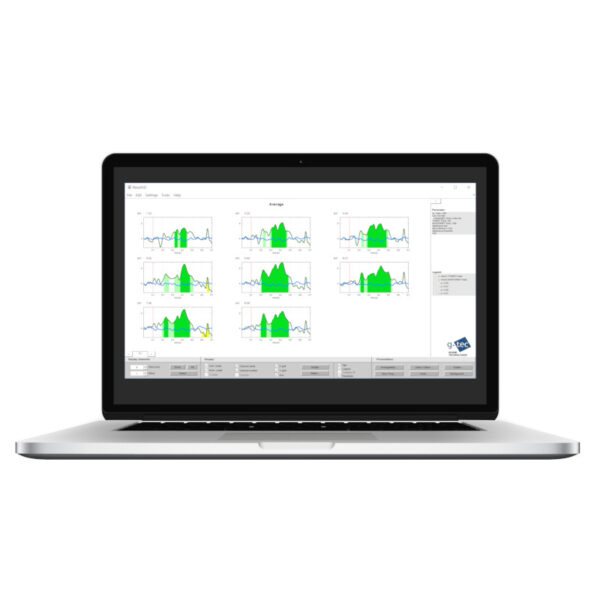
Transform recorded biosignals into scientific results with a comprehensive offline analysis environment. g.BSanalyze provides tools for preprocessing, transformation, feature extraction, visualization, statistical analysis and classification of EEG, ECoG and other biosignal data. It can directly continue workflows created with g.Recorder and g.HIsys, connecting data acquisition and real-time experiments with advanced offline analysis.
Use dedicated toolboxes for EEG, ECoG, ECG, cortico-cortical evoked potentials (CCEPs), classification, high-resolution EEG, cerebral function analysis and spike analysis. For BCI research, g.BSanalyze integrates with g.HIsys to analyze experimental data and train classifiers for P300, SSVEP and motor imagery applications.
OSCAR PRO, included with g.BSanalyze Professional, provides offline artifact correction for recorded EEG and ECoG data, while dedicated TMS correction tools support the analysis of TMS-EEG recordings. This makes g.BSanalyze the offline analysis layer of the g.tec Suite, taking experimental data from preprocessing through feature extraction and classification to detailed scientific analysis.
ANALYZE CORTIQ RESEARCH DATA WITH g.BSANALYZE
Analyze cortiQ Research data with g.BSanalyze using dedicated tools for offline intracranial electrophysiology analysis. Import cortiQ data and use the ECoG toolbox to process and analyze signals recorded from implanted electrodes.
For appropriately recorded cortico-cortical evoked potential data, the dedicated CCEP toolbox supports the calculation and analysis of CCEPs from ECoG recordings. Integrate stimulation information, electrode montages and recording metadata, and apply tools for referencing, channel exclusion, signal processing and visualization of evoked cortical responses.
cortiQ electrode montages can also be used with the Montage Creator tools included in g.tec Suite 2024 and visualized in 2D and 3D, including together with an imported brain model. This connects intracranial recordings with their anatomical electrode locations for spatial interpretation and subsequent visualization in g.HIsys and g.BSanalyze.


RECORD & REVIEW BIOSIGNALS WITH g.RECORDER
Acquire, visualize and store biosignal data in a dedicated environment for neuroscience experiments. g.Recorder supports recording of EEG, ECoG and other biosignals while providing real-time signal visualization, impedance checking and experimental event capture. Recorded data is stored in HDF5 format and can be transferred to g.BSanalyze for advanced offline processing and analysis.
g.Recorder Professional extends the recording workflow with recording review, real-time evoked potential visualization, synchronized video recording, heart rate and HRV analysis, cerebral function analysis and Paradigm Presenter integration via UDP. This enables researchers to monitor experimental data during acquisition and immediately inspect recorded signals and responses after an experiment.
This makes g.Recorder the dedicated recording and experiment documentation layer of the g.tec Suite, connecting biosignal acquisition with experimental events and subsequent offline analysis in g.BSanalyze.
PLAN & VISUALIZE ELECTRODE MONTAGES WITH MONTAGE CREATOR
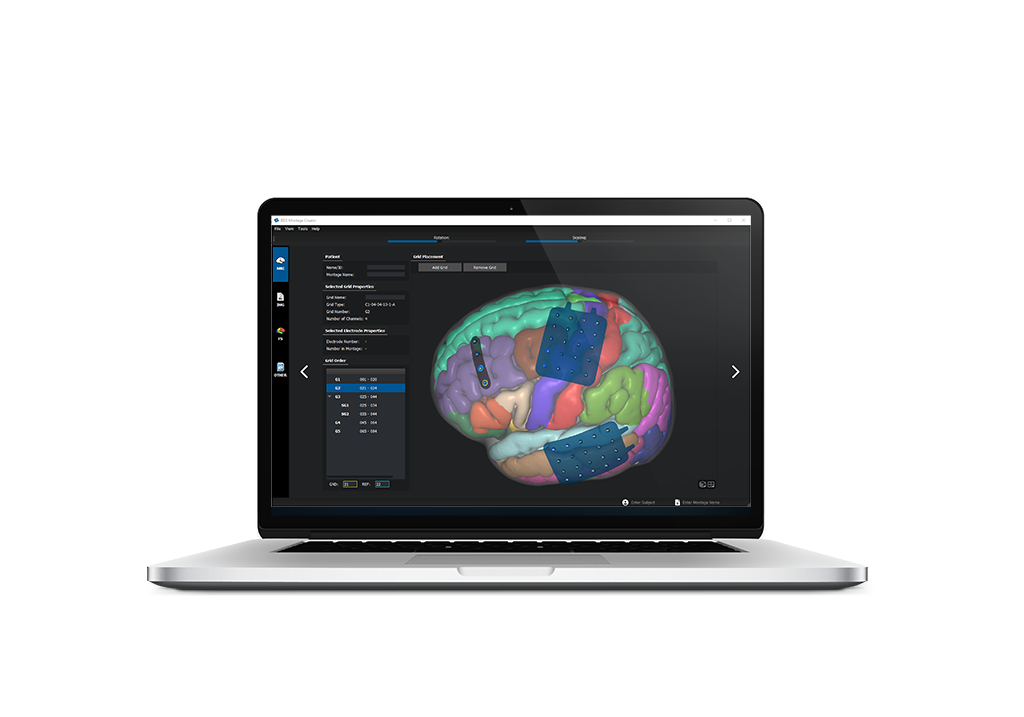
Plan electrode configurations and connect biosignal recordings with their anatomical locations. Montage Creator is part of g.tec Suite 2024 and enables researchers to define and visualize electrode positions on 2D images and 3D brain models for subsequent visualization and analysis in g.HIsys and g.BSanalyze.
For intracranial research, the iEEG Montage Creator supports ECoG grids and stereo-EEG depth electrodes, including patient-specific anatomy. Researchers can import reconstructed brain surfaces, use CT and MRI data for co-registration and electrode localization, and visualize electrode positions on the cortical surface. cortiQ montages can also be imported and displayed in 2D and 3D together with corresponding brain models.
For ultra-high-density EEG, the g.Pangolin Montage Creator supports planning 64, 128, 256 and 1,024-channel electrode configurations. Together, the Montage Creator tools provide the spatial layer of the g.tec Suite, connecting EEG, ECoG, sEEG and ultra-high-density recordings with electrode localization, topographic visualization and subsequent analysis in g.HIsys and g.BSanalyze.
WHICH SOFTWARE DO YOU NEED?
Choose the software that matches your research and development workflow. g.NEEDaccess and Montage Creator are included with g.tec Suite 2024, providing device access, developer APIs and electrode montage creation as part of the core software platform. g.HIsys, g.Recorder and g.BSanalyze are additional software packages that can be activated with separate licenses when you need real-time processing, dedicated biosignal recording or advanced offline analysis.
| Develop your own acquisition application in Python, MATLAB, C or .NET | g.NEEDaccess – included with g.tec Suite 2024 |
| Access EEG and other biosignal data directly from your own software | g.NEEDaccess – included with g.tec Suite 2024 |
| Acquire data remotely or provide one acquisition to multiple software clients | g.NEEDaccess – included with g.tec Suite 2024 |
| Acquire biosignals from multiple g.tec devices within one custom application | g.NEEDaccess – included with g.tec Suite 2024 |
| Control g.tec biosignal amplifiers within Simulink | g.HIsys Basic |
| Acquire and visualize biosignals in MATLAB/Simulink | g.HIsys Basic |
| Build custom Simulink-based biosignal processing workflows | g.HIsys Basic |
| Process biosignals in real time using basic g.HIsys models and blocks | g.HIsys Basic |
| Build real-time EEG, BCI or closed-loop applications | g.HIsys Professional |
| Develop P300, SSVEP or motor imagery BCI applications | g.HIsys Professional |
| Stream biosignals to external applications via LSL | g.HIsys Professional |
| Combine EEG with fNIRS, eye tracking or other multimodal signals in real time | g.HIsys Professional |
| Integrate real-time EEG processing with FES or other compatible stimulation systems | g.HIsys Professional |
| Correct artifacts during real-time processing with OSCAR LIVE | g.HIsys Professional |
| Record high-speed EEG for TMS-EEG and other time-critical experiments | g.Recorder Basic |
| Record and monitor EEG, ECoG and other biosignals | g.Recorder Basic |
| Record biosignals directly to HDF5 for subsequent analysis | g.Recorder Basic |
| Monitor signal quality and electrode impedance during acquisition | g.Recorder Basic |
| Configure recording channels and sampling rates for your experiment | g.Recorder Basic |
| Record experimental events, triggers and synchronized video | g.Recorder Professional |
| Record and inspect evoked potentials during an experiment | g.Recorder Professional |
| Synchronize experimental paradigms and event markers with biosignal recordings via UDP | g.Recorder Professional |
| Monitor heart rate and heart-rate variability together with your biosignal recording | g.Recorder Professional |
| Analyze recorded EEG, ECoG and biosignals offline | g.BSanalyze |
| Analyze ERP, ERD/ERS and BCI data offline | g.BSanalyze |
| Create automated offline analysis workflows for multiple datasets using batch processing | g.BSanalyze |
| Perform offline feature extraction and classification | g.BSanalyze |
| Analyze ECoG and CCEP data | g.BSanalyze |
| Analyze TMS-EEG recordings offline | g.BSanalyze |
| Correct artifacts in recorded EEG and ECoG data with OSCAR PRO | g.BSanalyze |
| Create EEG, ECoG or sEEG electrode montages | Montage Creator – included with g.tec Suite 2024 |
| Plan 64-, 128-, 256- or 1,024-channel ultra-high-density EEG montages | g.Pangolin Montage Creator – included with g.tec Suite 2024 |
| Localize intracranial electrodes using CT/MRI and patient-specific anatomy | iEEG Montage Creator – included with g.tec Suite 2024 |
BUILD A COMPLETE REAL-TIME EEG & BCI WORKFLOW
See how g.tec Suite 2024 connects EEG acquisition, real-time processing, recording, external applications and offline analysis in one research workflow. This hands-on demonstration shows how to build an EEG experiment with g.HIsys and MATLAB/Simulink, starting with raw EEG acquisition and progressing to filtering, visualization, frequency analysis and bandpower feature extraction.
The workflow is extended with raw data recording and Lab Streaming Layer (LSL) to stream EEG into an external application, demonstrating how g.HIsys can serve as the real-time processing backend for custom BCI applications. The video also demonstrates the connection between the different g.tec Suite 2024 applications: recorded data is processed offline in g.BSanalyze, while g.Recorder and g.HIsys can run in parallel to combine dedicated biosignal recording with real-time research processing.

PLAN & LOCALIZE INTRACRANIAL ELECTRODES IN 2D & 3D
See how the iEEG Montage Creator turns ECoG electrode configurations into anatomically meaningful 2D and 3D montages. Position ECoG grids interactively, assign channel numbers and visualize intracranial electrode locations on schematic images, photographs of the craniotomy, the MNI 152 brain template or a reconstructed patient-specific brain.
The software includes a database of more than 100 certified electrode grids from different manufacturers and supports up to 1,024 channels and 64 electrode grids. Electrode locations can also be extracted from CT imaging, with CT/MRI data supported for patient-specific electrode localization and visualization. Created montages can subsequently be used in g.HIsys and g.BSanalyze for spatial visualization of intracranial brain activity.

PLAN ULTRA-HIGH-DENSITY EEG MONTAGES UP TO 1,024 CHANNELS
See how the g.Pangolin Montage Creator simplifies electrode planning for ultra-high-density EEG experiments. Interactively position g.Pangolin electrode grids on the head and define precise electrode locations for 64-, 128-, 256- or 1,024-channel EEG configurations.
The resulting montage provides the spatial information needed to topographically visualize recorded brain activity in g.HIsys Professional and g.BSanalyze, connecting high-channel-count EEG acquisition with spatial brain mapping and subsequent analysis.

LOCALIZE INTRACRANIAL ELECTRODES WITH CT & MRI
See how the iEEG Montage Creator combines post-operative CT and pre-operative anatomical MRI data to localize intracranial electrodes in 3D. The co-registration workflow extracts electrode locations from CT imaging and relates them to the patient’s anatomical MRI, enabling electrode positions to be visualized on a patient-specific 3D model of the cortex.
The resulting montage connects ECoG and intracranial EEG recordings with their anatomical electrode locations, providing the spatial information needed for cortical visualization and subsequent analysis within the g.tec software environment.

AUTOMATICALLY LOCALIZE ECoG ELECTRODES FROM CT
See how the iEEG Montage Creator detects implanted electrodes directly from post-operative CT data. The software segments implanted electrodes in the CT scan and automatically determines their locations, simplifying the creation of an accurate intracranial electrode montage.
The detected positions can be used to visualize ECoG grids together with CT imaging and connect individual recording channels with their corresponding electrode locations for subsequent intracranial EEG visualization and analysis.

PLAN & VISUALIZE sEEG DEPTH ELECTRODES IN 3D
See how the iEEG Montage Creator supports interactive planning and visualization of stereo-EEG depth electrode configurations. Select a brain region of interest, inspect the anatomy in 3D, choose depth electrodes from the electrode library, and define their position, trajectory and insertion angle within the brain.
Individual electrodes can be identified within the montage, creating a spatial representation of the implanted depth electrodes for intracranial electrophysiology, high-gamma mapping, cortiQ and neuromodulation research.

FREQUENTLY ASKED QUESTIONS
Yes. Customers purchasing a g.tec biosignal amplifier can receive discounts on selected g.tec software packages.
When purchasing a g.HIamp, g.USBamp or g.Nautilus, the following discounts apply:
- g.tec Suite 2024: 80% discount
- g.BSanalyze: 50% discount
- g.HIsys Basic: 5% discount
- g.HIsys Professional: 10% discount
- g.Recorder Basic: 5% discount
- g.Recorder Professional: 10% discount
When purchasing a Unicorn BCI Core-8, the following software packages are available with the amplifier:
- g.tec Suite 2024: 80% discount
- g.HIsys Basic: 5% discount
- g.HIsys Professional: 10% discount
- g.BSanalyze: 50% discount
g.Recorder Basic and g.Recorder Professional are not offered as software options with Unicorn BCI Core-8.
Yes. Custom application development is already supported by g.tec Suite 2024 through g.NEEDaccess and its APIs. g.NEEDaccess provides access to compatible g.tec biosignal amplifiers and supports Python, MATLAB, C, .NET and Network interfaces.
This means developers who primarily need direct hardware access and raw biosignal acquisition for their own software do not need to purchase g.HIsys, g.Recorder or g.BSanalyze. Those packages can be activated separately when additional real-time processing, recording or offline analysis functionality is required.
- g.tec Suite 2024 is the software platform and foundation. It provides g.NEEDaccess and developer APIs, Montage Creator, data conversion, stimulation interfaces and centralized software management.
- g.HIsys is an additional package for real-time biosignal acquisition, processing, BCI development and closed-loop experiments.
- g.Recorder is an additional package for dedicated biosignal acquisition, visualization, recording and review.
- g.BSanalyze is an additional package for advanced offline biosignal processing and analysis.
Customers can therefore start with g.tec Suite 2024 and activate the additional software packages they need through licenses, rather than requiring every application for every research setup.
g.tec Suite 2024 is more than a license manager or launcher. The g.tec Suite 2024 provides its own tools for biosignal hardware access, custom software development, electrode montage creation, data conversion, stimulation interfaces and software management.
It includes g.NEEDaccess and its Python, MATLAB, C, .NET and Network APIs, allowing developers to acquire data from compatible g.tec amplifiers and build their own applications. The g.tec Suite 2024 also provides Montage Creator, data conversion, stimulation control interfaces, license control, software updates, notifications, system diagnostics and onboarding functionality.
g.HIsys, g.Recorder and g.BSanalyze are additional software packages that can be licensed and activated when real-time processing, dedicated biosignal recording or advanced offline analysis is required.
No. g.tec Suite 2024 contains both standalone functionality and MATLAB-based software components. Customers do not need to license g.HIsys, g.Recorder or g.BSanalyze simply to use the core g.tec Suite 2024 functionality.
MATLAB and Simulink are particularly relevant when g.HIsys is licensed for real-time biosignal processing and rapid prototyping. Other components and standalone applications have different software requirements depending on the selected package.
Yes. The g.Pangolin Montage Creator within g.tec Suite 2024 supports planning 64-, 128-, 256- and 1,024-channel ultra-high-density EEG recordings with precise electrode positions.
These montages can subsequently provide spatial electrode information for topographic visualization in additional software packages such as g.HIsys Professional and g.BSanalyze.
Yes. The iEEG Montage Creator within g.tec Suite 2024 supports intracranial ECoG grids and stereo-EEG depth electrodes. Researchers can position electrodes on schematic images, photographs of the craniotomy, the MNI152 brain template or reconstructed patient-specific anatomy.
The software also supports CT/MRI data, CT electrode segmentation and CT/MRI co-registration for extracting and visualizing intracranial electrode locations in 3D.
Yes. Montage Creator is part of g.tec Suite 2024 and does not require a g.HIsys, g.Recorder or g.BSanalyze license simply to provide the Suite’s montage-creation functionality. It enables researchers to define and visualize electrode positions on 2D images and 3D brain models.
Montages can subsequently be used with additional licensed software such as g.HIsys and g.BSanalyze for spatial and topographic visualization of recorded brain activity.
Yes. g.tec Suite 2024 itself provides control interfaces for compatible g.Estim FES, g.Estim PRO and g.Estim PRO Switching Unit systems. These interfaces are part of the Suite functionality.
For more advanced real-time and closed-loop stimulation experiments, customers can additionally license g.HIsys Professional, which provides dedicated interfaces for integrating stimulation with real-time biosignal processing and experimental workflows.
Yes. A g.tec Suite 2024 installation can be extended with the software packages required for TMS-EEG acquisition, real-time processing and offline analysis.
g.HIsys Professional, available with an additional license, provides TMS functionality within its real-time processing environment. g.BSanalyze can be licensed for subsequent offline analysis and includes dedicated TMS artifact-correction functionality.
This modular approach allows researchers to configure the software environment according to the requirements of their TMS-EEG workflow.
Yes. g.BSanalyze can be added to g.tec Suite 2024 as a separately licensed offline analysis package. It can read and analyze data generated with g.Recorder and g.HIsys, creating a continuous workflow from acquisition and real-time experiments to advanced offline analysis.
g.BSanalyze provides biosignal preprocessing, batch processing, feature extraction, classification and specialized analysis toolboxes for EEG, ECoG and other biosignals. It also integrates with g.HIsys for BCI workflows in which recorded experimental data is analyzed offline and used to calibrate BCI models.
g.Recorder is an additional software package that can be activated within g.tec Suite 2024 with the corresponding license. Customers can choose between g.Recorder Basic and g.Recorder Professional, depending on the required recording functionality.
g.Recorder Basic provides biosignal acquisition, high-speed visualization, HDF5 storage, configurable sampling frequencies and recording channels, visualization filters and impedance checking.
g.Recorder Professional extends this with recording review, multi-evoked-potential visualization, synchronized video recording, heart rate and HRV analysis, cerebral function analysis, Paradigm Presenter integration via UDP and additional recording functionality.
g.tec Suite 2024 includes data conversion functionality for converting recorded data to EDF and GDF formats. This functionality belongs to the g.tec Suite 2024 itself and does not require g.Recorder, g.HIsys or g.BSanalyze to provide the conversion tool.
When g.Recorder is licensed, recordings can additionally be stored in HDF5 format. g.Recorder is an optional software package that can be activated within g.tec Suite 2024 when dedicated biosignal recording functionality is required.
LSL is available through the optional g.HIsys Professional software package. g.HIsys Professional includes an LSL Interface and Marker for integrating Lab Streaming Layer into real-time EEG, BCI and multimodal research workflows.
LSL is therefore not a general interface of every g.tec Suite 2024 component. Customers who require LSL can activate g.HIsys Professional with the corresponding license within their g.tec Suite environment.
Yes. For advanced multimodal real-time experiments, g.HIsys Professional can be licensed and activated within g.tec Suite 2024.
g.HIsys Professional provides functionality for integrating EEG with modalities and experimental systems including fNIRS, eye tracking, TMS, ECG, respiration, EMG/EOG, audio/video and Lab Streaming Layer (LSL).
This makes it possible to build synchronized multimodal and closed-loop research workflows within the g.tec software ecosystem while keeping g.HIsys Professional clearly separated from the functionality included with the base g.tec Suite 2024.
The g.tec software environment supports multiple biosignal modalities, with the exact functionality depending on the connected hardware and activated software package.
Through g.NEEDaccess and its APIs included with g.tec Suite 2024, custom applications can work with biosignals such as EEG, ECoG, ECG, EMG and EOG from compatible g.tec acquisition systems.
Additional licensed packages extend what can be done with these signals:
- g.HIsys adds advanced real-time processing,
- g.Recorder adds dedicated recording and review, and
- g.BSanalyze adds advanced offline analysis.
OSCAR LIVE and OSCAR PRO provide artifact correction at different stages of the g.tec software workflow and are available through additional Professional software packages.
- OSCAR LIVE is included with g.HIsys Professional and performs artifact correction within real-time EEG processing and BCI workflows.
- OSCAR PRO is included with g.BSanalyze Professional and provides offline artifact correction for previously recorded EEG and ECoG data.
They are therefore not part of the base g.tec Suite 2024 functionality. Customers can activate the corresponding g.HIsys Professional or g.BSanalyze Professional software package when real-time or offline artifact correction is required.
Yes, by adding g.HIsys Professional to the g.tec Suite 2024 environment.
g.HIsys Professional is an additional licensed software package that provides blocks and models for real-time biosignal acquisition, preprocessing, feature extraction, classification, visualization and experimental paradigms.
It supports research workflows including P300, SSVEP and motor-imagery BCIs, stimulation, TMS, eye tracking, fNIRS, distributed EEG, hyperscanning and other real-time neuroscience applications.
This enables acquired biosignals to be processed and classified in real time and the resulting information to be used for feedback, external-device control or compatible stimulation systems.
g.NEEDaccess is included with g.tec Suite 2024 and provides the device-access, networking and API layer for custom application development. It is the appropriate choice when researchers want to acquire data from compatible g.tec hardware directly in Python, MATLAB, C, .NET or their own networked application.
g.HIsys is an additional licensed software package for real-time biosignal processing, MATLAB/Simulink-based experiment development, BCIs and closed-loop applications.
g.Recorder is an additional licensed software package for dedicated biosignal acquisition, visualization, recording and review.
This allows customers to use the development capabilities already included with g.tec Suite 2024 and add specialized real-time processing or recording functionality only when required.
Yes. g.NEEDaccess is included with g.tec Suite 2024 and uses a server architecture that supports both direct and network-based acquisition.
Biosignal data can be acquired on a computer different from the computer physically connected to the acquisition device, provided the systems are connected through the network. A single acquisition can also be made available simultaneously to multiple clients, enabling several applications to access the same biosignal stream.
This provides the networking and connectivity foundation for developing distributed acquisition and custom neuroscience applications directly with g.tec Suite 2024.
Yes. g.NEEDaccess, included with g.tec Suite 2024, provides programmatic access to compatible g.tec acquisition systems.
The MATLAB API, for example, provides access to amplifier configuration functions including available channels, impedance measurements, bandpass and notch filters, supported sampling rates, scaling parameters and device configuration. Applications can also start and stop acquisition and retrieve acquired data programmatically.
This functionality belongs to the g.NEEDaccess development layer of g.tec Suite 2024 and does not require g.HIsys, g.Recorder or g.BSanalyze.
Yes. Python access is available through the g.NEEDaccess Python API included with g.tec Suite 2024. The API can acquire real-time data from g.HIamp, g.USBamp, g.Nautilus and Unicorn BCI Core-8 and make it available to custom Python applications.
Researchers can therefore combine g.tec biosignal acquisition with their own Python code for processing, visualization, machine learning or application development without requiring an additional g.HIsys, g.Recorder or g.BSanalyze license.
Yes. The g.NEEDaccess developer interfaces are included with g.tec Suite 2024 and provide Python, MATLAB, C and .NET APIs, as well as a Network API.
These interfaces allow researchers and developers to create their own acquisition, visualization, signal-processing and neuroscience applications around compatible g.tec acquisition systems.
The MATLAB API, for example, provides functions for discovering devices and channels, measuring impedance, retrieving available filters and sampling rates, reading device and scaling information, configuring devices, starting and stopping acquisition, and retrieving acquired biosignal data.
g.HIsys, g.Recorder and g.BSanalyze are not required for direct API-based development and can be licensed separately when their specialized functionality is needed.
g.NEEDaccess is included with g.tec Suite 2024 and provides direct software access to g.HIamp, g.USBamp, g.Nautilus and Unicorn BCI Core-8 acquisition systems.
The g.NEEDaccess Server handles device communication, acquisition and preprocessing and makes the acquired biosignal data available to client applications. This allows researchers and developers to build their own applications without implementing the low-level communication with the acquisition hardware themselves.
No additional g.HIsys, g.Recorder or g.BSanalyze license is required if the objective is to access compatible g.tec hardware through g.NEEDaccess and develop a custom application.
g.tec Suite 2024 is the base software platform for working with g.tec biosignal acquisition and stimulation systems. It provides its own functionality, including g.NEEDaccess and its developer APIs, Montage Creator tools, data conversion, stimulation interfaces, software updates, license management and system diagnostics.
The platform can then be extended with additional licensed software packages according to the research workflow.
- g.HIsys adds real-time acquisition and processing in MATLAB/Simulink,
- g.Recorder adds dedicated biosignal recording and review, and
- g.BSanalyze adds advanced offline biosignal processing and analysis.
This modular architecture allows customers to start with g.tec Suite 2024 and activate only the additional software packages required for their applications.
NEED MORE INFORMATION
ABOUT THIS PRODUCT?
Send us your email so we can contact you as soon as possible.


