


PROGRAMMABLE FES FOR NEUROREHABILITATION & CLOSED-LOOP RESEARCH
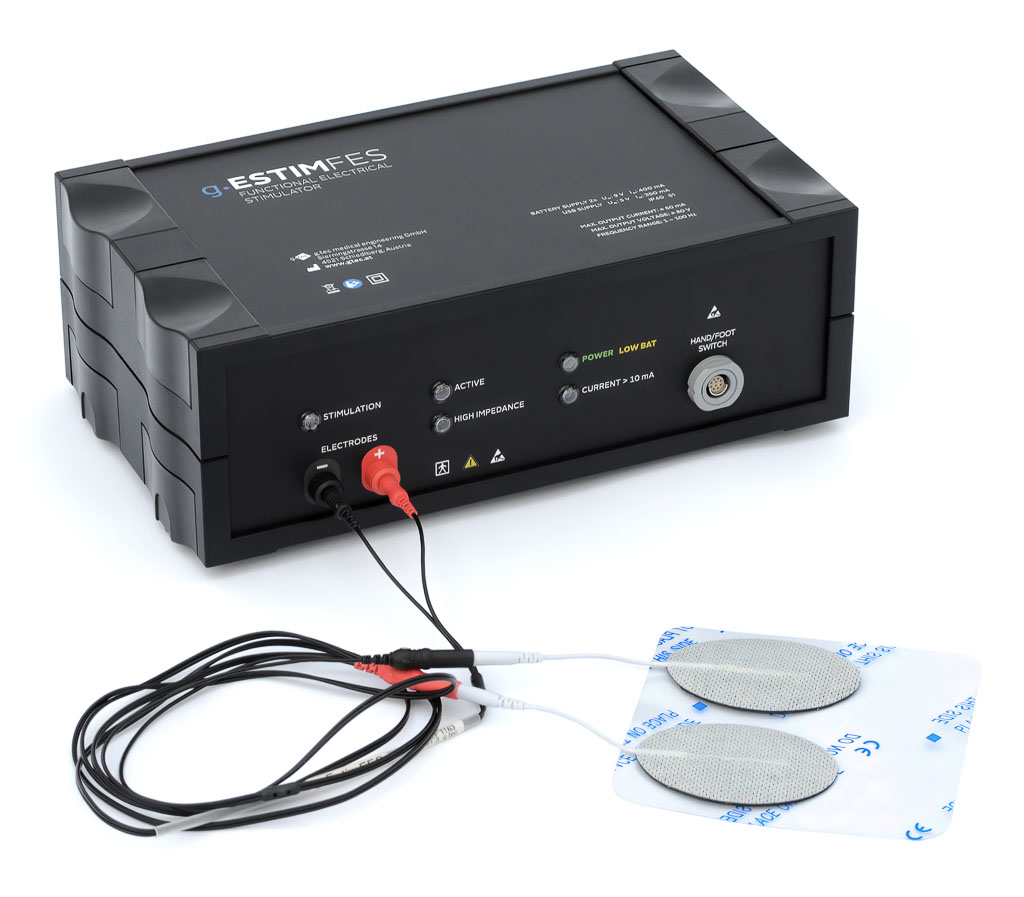
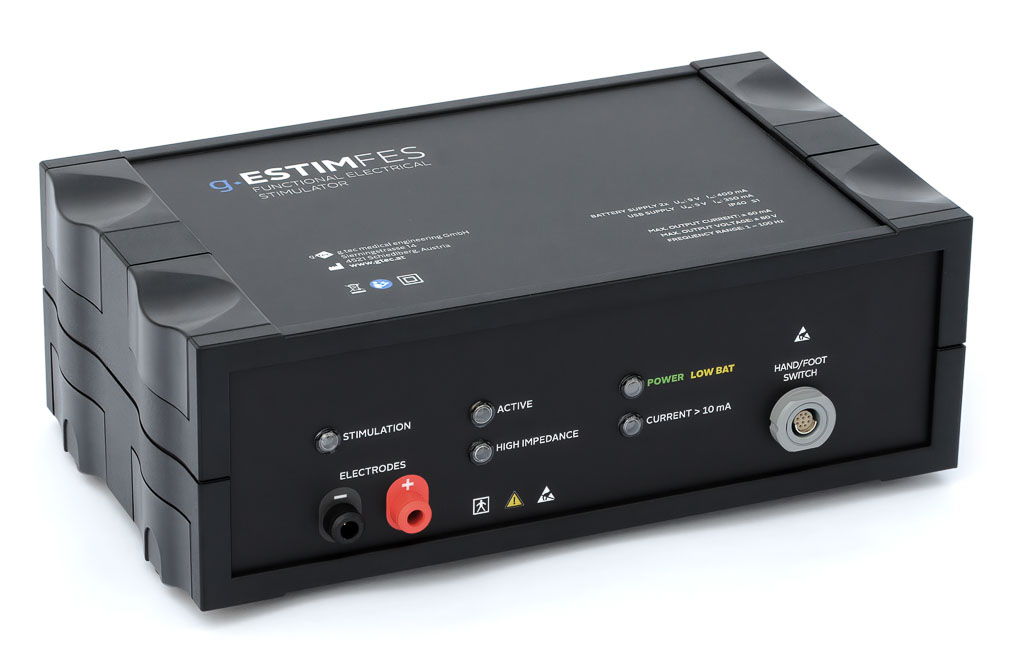
The g.Estim FES is a programmable constant-current functional electrical stimulator for neurorehabilitation, muscle stimulation and advanced neuroscience research. It delivers configurable biphasic stimulation with currents up to 60 mA and provides precise control over phase duration, pulse rate, stimulation and rest periods, and rising and falling ramps.
Designed for both therapeutic applications and research, g.Estim FES supports applications including muscle re-education, reduction of muscle spasms, prevention or retardation of disuse atrophy and maintaining or increasing range of motion. Integrated electrode impedance measurement, stimulation-current monitoring and a high-impedance stop mechanism help monitor stimulation and electrode contact.
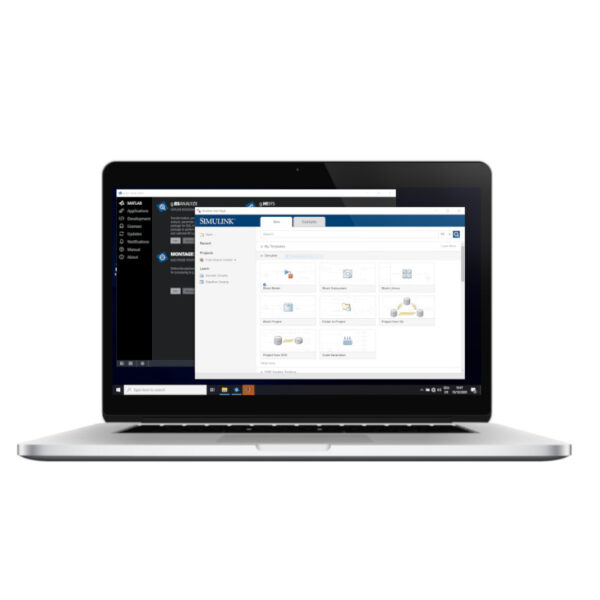
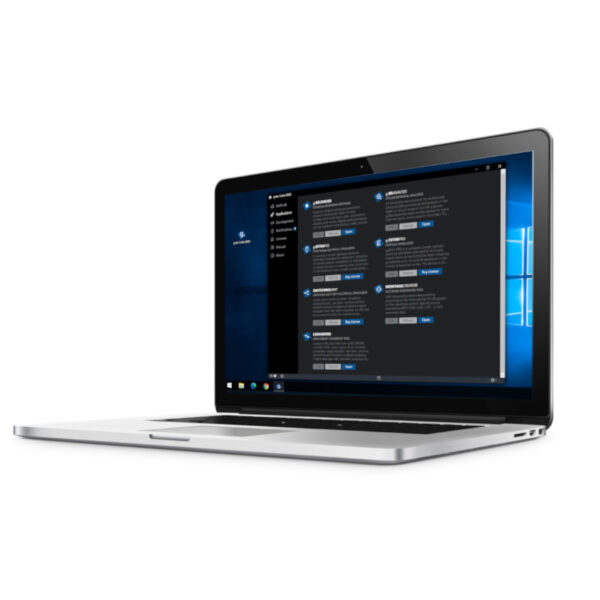
For advanced research, g.Estim FES can be controlled from MATLAB/Simulink with g.HIsys and synchronized with g.tec EEG/ECoG systems, enabling researchers to integrate muscle or nerve stimulation into real-time and closed-loop experiments.
| Up to 60 mA stimulation | Programmable biphasic constant-current stimulation from ±1 to ±60 mA |
| Flexible stimulation parameters | Configure phase duration, pulse rate, work/rest periods and stimulation ramps |
| Real-time programmable control | Control stimulation parameters and trigger stimulation from MATLAB/Simulink with g.HIsys |
| Closed-loop ready | Synchronize FES with EEG/ECoG acquisition and real-time processing |
| Electrode impedance monitoring | Check electrode impedance and stop stimulation when high impedance is detected |
| Stimulation current monitoring | Verify whether the programmed stimulation current can be delivered |
| Hardware synchronization | Digital interfaces enable triggering and synchronization with external equipment |
| Flexible stimulation control | Optional hand and foot switches support manual stimulation control |
| Medical device | CE-certified and FDA-cleared for use in humans |
| Stimulation type | Biphasic constant-current stimulation |
| Stimulation current | ±1–60 mA |
| Current accuracy | ±10% |
| Stimulation current | 1–60 mA |
| Current resolution | 1 mA |
| Current accuracy | ±10% |
| Maximum electrode output | ±80 V DC |
| Phase shape | Rectangular |
| Phase duration | 50–400 µs |
| Phase duration resolution | 10 µs |
| Phase duration accuracy | ±10% or ±10 µs, whichever is greater |
| Pulse rate | 1–100 pulses/s |
| Pulse rate resolution | 1 pulse/s |
| Pulse rate accuracy | ±10% |
| Work time | 2–20 s, 0.5 s increments |
| Rest time | 2–50 s, 0.5 s increments |
| Rising/falling ramps | 0–10 s, 0.5 s increments |
| Digital outputs | 2 × digital outputs for synchronization with external equipment |
| PC interface | USB |
| Power supply | 2 × 9 V battery + USB |
| Electrical safety class | Class II |
| Applied part | Type BF |
| Ingress protection | IP40 |
PROGRAMMABLE FES FOR NEUROREHABILITATION
The g.Estim FES delivers programmable biphasic constant-current stimulation for neurological and orthopedic rehabilitation. Stimulation parameters can be adapted to individual therapeutic requirements, allowing controlled activation of muscles and nerves during rehabilitation.
The system supports therapeutic applications including muscle re-education, temporary reduction of muscle spasms, prevention or retardation of disuse atrophy, increasing local blood flow, and maintaining or increasing range of motion.
With stimulation currents from 1 to 60 mA, configurable pulse parameters, work and rest periods, and adjustable rising and falling ramps, g.Estim FES provides flexible control over repeated muscle stimulation and rehabilitation protocols.


CONTROL EVERY PHASE OF THE STIMULATION
g.Estim FES provides precise control over the parameters that shape each stimulation cycle. Researchers and clinicians can configure the stimulation current, phase duration, pulse rate, work and rest periods, and rising and falling ramps to adapt stimulation to the application and desired muscle response.
Stimulation current can be programmed from 1 to 60 mA, with phase durations from 50 to 400 µs and pulse rates from 1 to 100 pulses per second. Work and rest periods define repeated stimulation cycles, while adjustable ramps allow the stimulation intensity to increase and decrease gradually.
PROGRAM & CONTROL FES WITH MATLAB/SIMULINK
Go beyond predefined stimulation protocols and integrate g.Estim FES directly into programmable research workflows. In combination with g.HIsys, stimulation parameters can be configured and controlled from MATLAB/Simulink, allowing researchers to adapt FES to their experimental paradigm.
During stimulation, the system provides feedback on the stimulation state and delivered current, helping researchers verify whether the programmed stimulation can be applied under the current electrode conditions.
This makes g.Estim FES suitable for custom stimulation paradigms, automated experiments and real-time research applications where stimulation needs to interact with other components of the experimental setup.

COMBINE EEG WITH FUNCTIONAL ELECTRICAL STIMULATION
Combine g.Estim FES with g.tec EEG or ECoG acquisition systems to integrate functional electrical stimulation into brain-signal-based experiments. Systems such as g.HIamp, g.USBamp and g.Nautilus can acquire neural activity while g.HIsys provides the environment for real-time signal processing and experimental control.
Brain signals can be analyzed in real time and used within programmable research workflows to control stimulation, enabling applications in BCI research, motor rehabilitation and closed-loop neuroscience.
This creates a complete research workflow in which neural activity can be recorded, processed and translated into functional electrical stimulation.
SYNCHRONIZE FES WITH YOUR EXPERIMENT
g.Estim FES provides two digital outputs (DO1 and DO2) for synchronizing external equipment with electrical stimulation. The synchronization signals can be recorded together with EEG, ECoG or other biosignals, allowing researchers to align the stimulation timing with the acquired physiological data.
This enables stimulation events to be integrated into multimodal experiments, real-time analysis workflows and synchronized neurophysiological recordings. The digital outputs can indicate stimulation timing so that researchers can identify when stimulation occurred in relation to the recorded signals.

MONITOR STIMULATION & ELECTRODE CONTACT
g.Estim FES continuously supports safe and controlled stimulation through electrode impedance checking and stimulation-current monitoring. Before and during stimulation, the system helps verify that the electrode conditions allow the programmed current to be delivered.
If the requested stimulation current cannot be delivered due to high impedance, for example because of insufficient electrode contact, g.Estim FES automatically aborts the stimulation and indicates the high-impedance condition. This provides immediate feedback on electrode contact and stimulation delivery.
Check. Stimulate. Protect.
- Electrode Impedance Check: Verify electrode conditions before stimulation.
- Current Stimulation Monitoring: Monitor whether the programmed stimulation current can be delivered.
- High-Impedance Detection: Stimulation is automatically aborted if the requested current cannot be delivered.

SPINAL CORD INJURY
For people with spinal cord injury, FES can be used to activate partially or fully paralyzed muscles and generate functional movement. g.Estim FES can be integrated into a BCI workflow in which motor imagery is detected from brain activity and translated into electrical stimulation to produce movements such as hand opening and grasping.
The potential of this approach was demonstrated by Gaurav Sharma and the team at Battelle Memorial Institute, whose implanted BCI enabled real-time cortical control of wrist and finger movements and received the BCI Award 2016.
BCI & FES FOR UPPER-LIMB STROKE REHABILITATION
Sebastián-Romagosa et al. – Frontiers in Neuroscience, 2020
In a study with 51 stroke patients with upper-extremity hemiparesis, motor imagery was detected with a BCI and paired with g.Estim FES stimulation of the wrist extensors. After 25 sessions, the study reported significant improvements in upper-extremity motor function and reductions in wrist and finger spasticity, with improvements persisting at the six-month follow-up.


BCI-TRIGGERED FES FOR GAIT REHABILITATION AFTER STROKE
Sebastián-Romagosa et al. – Frontiers in Neuroscience, 2023
Researchers investigated motor-imagery BCI training in 25 stroke patients with gait disability. g.Estim FES was used to stimulate wrist and ankle extensors when the BCI detected the corresponding motor imagery, combining brain-signal detection with functional electrical stimulation as part of the rehabilitation workflow.
BCI & FES FOR GAIT REHABILITATION IN MULTIPLE SCLEROSIS
Sebastián-Romagosa et al. – Frontiers in Medicine, 2026
Researchers evaluated a motor-imagery BCI combining g.Nautilus PRO, two g.Estim FES stimulators and virtual-reality feedback in people with Multiple Sclerosis. Twenty-four participants completed 30 BCI sessions, with the study reporting improvements in walking endurance, mobility, spasticity and patient-reported outcomes that were largely maintained six months after treatment.

BUILD A CLOSED-LOOP EEG & FES SYSTEM
See g.Estim FES in a complete brain-computer interface experiment. This hands-on demonstration shows how motor-imagery EEG is recorded with g.HIamp, classified in real time with g.HIsys and MATLAB/Simulink, and used to control g.Estim FES to generate functional hand movement.

FREQUENTLY ASKED QUESTIONS
g.Estim FES is a programmable functional electrical stimulator for neurological and orthopedic rehabilitation as well as advanced neuroscience and BCI research. Therapeutic applications include temporary reduction of muscle spasms, prevention or retardation of disuse atrophy, increasing local blood flow, muscle re-education, prevention of post-surgical phlebo-thrombosis through immediate stimulation of calf muscles, and maintaining or increasing range of motion.
g.Estim FES can also be used for functional muscle activation in people with central nervous system injuries, including stroke and spinal cord injury, and integrated with EEG/ECoG systems for motor-imagery BCI, brain-controlled muscle stimulation, neurorehabilitation and closed-loop research.
g.Estim FES provides programmable biphasic constant-current stimulation from 1 to 60 mA. Phase duration can be configured from 50 to 400 µs, with pulse rates from 1 to 100 pulses per second. Work and rest periods as well as rising and falling ramps can also be programmed.
g.Estim FES is a constant-current stimulator with a maximum electrode output of ±80 V DC. The voltage required to deliver the programmed current depends on the electrode and load impedance. If the requested current cannot be delivered because the impedance is too high, the system detects the condition and aborts stimulation.
Yes. g.Estim FES provides electrode impedance checking and stimulation-current monitoring. If the requested stimulation current cannot be delivered, for example because of insufficient electrode contact, the system indicates a high-impedance condition and aborts stimulation.
Yes. g.Estim FES provides two digital outputs, DO1 and DO2, for synchronizing external equipment with electrical stimulation. The synchronization signals can be recorded together with EEG, ECoG or other biosignals to align stimulation events with the acquired physiological data.
Yes. g.Estim FES can be integrated with g.tec biosignal acquisition systems including g.HIamp, g.USBamp and g.Nautilus. Together with g.HIsys, these systems enable EEG/ECoG acquisition, real-time signal processing and programmable stimulation workflows.
Yes. In research configurations, g.Estim FES can be integrated with g.HIsys and MATLAB/Simulink. Researchers can incorporate FES into programmable experimental workflows and control stimulation parameters while receiving information about the stimulation state and current delivery.
Yes. Brain signals acquired with a compatible EEG or ECoG system can be processed in real time and used within a programmable research workflow to control FES. This enables applications such as motor-imagery BCI, brain-controlled muscle stimulation and closed-loop neurorehabilitation research.
g.Estim FES features a galvanically isolated Type BF applied part, electrode impedance checking, stimulation-current monitoring and high-impedance detection with stimulation abort. The device is classified as Class II and has an IP40 enclosure rating.
Yes. g.Estim FES is designed for neurological therapeutic applications and is listed by g.tec as CE-certified and FDA-cleared for use in humans. Its intended therapeutic applications include muscle re-education, temporary reduction of muscle spasms, prevention or retardation of disuse atrophy, increasing local blood flow, and maintaining or increasing range of motion.

NEED MORE INFORMATION
ABOUT THIS PRODUCT?
Send us your email so we can contact you as soon as possible.


