


BUILD YOUR BRAIN-COMPUTER INTERFACE LAB
From a single-user BCI workstation to a fully equipped neuroscience laboratory, g.tec provides the hardware, software, and expertise to build research environments tailored to your scientific goals.
Explore our recommended laboratory setups for brain-computer interfaces, hyperscanning, evoked potentials, ECoG, and applied neurophysiology. Discover how EEG amplifiers, electrodes, real-time processing software, stimulation devices, and external systems work together to support advanced neuroscience research.
Whether you’re establishing a new laboratory or expanding an existing setup, our lab plans help you identify the components, interfaces, and infrastructure required for your experiments.
| Fully Equipped BCI Lab | Motor imagery, P300, SSVEP, neurofeedback, brain-controlled robotics, virtual reality, and hybrid BCI development |
| Multi-User Hyperscanning & BCI Lab | Simultaneous EEG recordings, social neuroscience, collaborative BCIs, group interaction, and multi-participant experiments |
| Evoked Potentials & Stimulation Lab | ERP, P300, VEP, auditory and somatosensory evoked potentials, stimulus synchronization, and multimodal stimulation |
| ECoG Research Lab | Invasive BCI research, high-gamma activity, cortical electrophysiology, functional connectivity, and neural decoding |
| Aerospace & Applied Neurophysiology Lab | Cognitive workload, neuroergonomics, human factors, simulator research, physiological monitoring, and multimodal data acquisition |
| EEG & Biosignal Acquisition | g.HIamp, g.USBamp, g.Nautilus – multichannel acquisition for EEG and other compatible electrophysiological signals |
| Electrodes & Sensors | EEG caps, wet and dry electrodes, and compatible EEG, EOG, EMG, and physiological sensors |
| Real-Time Processing & BCI Development | g.HIsys with MATLAB/Simulink for real-time acquisition, signal processing, feature extraction, classification, and experimental control |
| Offline Analysis & Classification | g.BSanalyze for biosignal analysis, feature extraction, and classifier development |
| Stimulation & Synchronization | g.AUDIObox, g.TACTILEbox, g.TRIGbox, and compatible external visual, auditory, tactile, and electrical stimulation systems |
| BCI Paradigms & Applications | Motor imagery, P300, SSVEP, cVEP, hybrid BCI, neurofeedback, and multi-user experiments |
| External Devices & Feedback | Integration options for compatible robotic devices, exoskeletons, eye trackers, Unity applications, and virtual reality systems |
| Laboratory Infrastructure | Recording and processing computers, data storage, synchronization interfaces, displays, and application-specific equipment |
PLAN YOUR OWN BCI LAB
Planning a new BCI or neurophysiology laboratory? Our recommended setups provide a starting point for identifying the equipment, software, and interfaces required for your experiments. Tell us about your research application, preferred recording technology, number of participants, stimulation requirements, and intended feedback systems. Our team can help you identify a suitable combination of g.tec components and compatible external equipment.
Whether you need a compact BCI research setup or a comprehensive multimodal laboratory, we can help you plan a system around your scientific objectives.

BUILD YOUR SYSTEM WITH g.tec HARDWARE & SOFTWARE
Build a complete BCI or neuroscience research system with g.tec’s integrated ecosystem of EEG amplifiers, electrodes, real-time BCI software, signal analysis tools, and stimulation interfaces. Combine g.HIamp, g.USBamp, or g.Nautilus with g.HIsys, g.BSanalyze, and compatible accessories to acquire, process, and analyze brain signals. Integrate external devices, robotics, and virtual reality to develop advanced BCI applications.
From individual components to fully equipped laboratories, g.tec helps you configure the right technologies for your research.
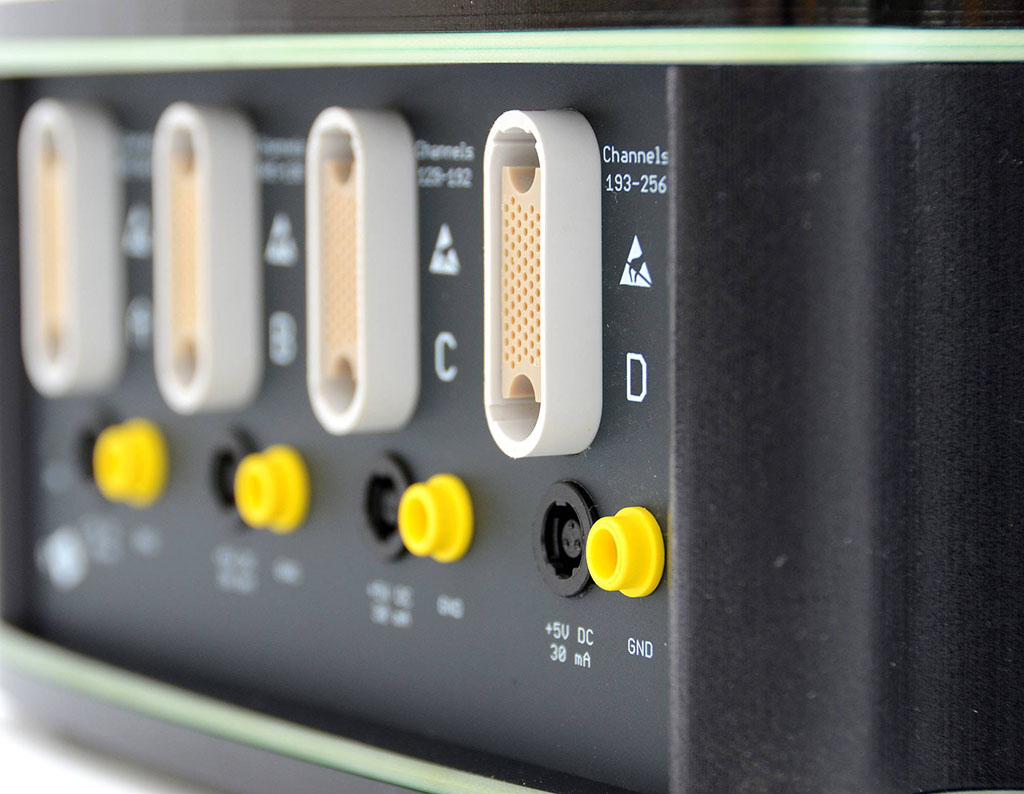
ONE RESEARCH PLATFORM. DECADES OF POSSIBILITIES
A research laboratory should evolve with your science, not require a completely new system for every project. g.tec provides an integrated, modular ecosystem of biosignal acquisition hardware, real-time processing software, stimulation interfaces, and research tools designed to work together. Start with the laboratory you need today and expand its capabilities as your research advances.
From fundamental EEG experiments to high-density recordings, multimodal neuroscience, hyperscanning, and advanced BCI applications, g.tec helps you build on existing infrastructure, preserve compatible investments, and develop sophisticated research environments over the long term.

FULLY EQUIPPED BCI RESEARCH LAB
Create a versatile brain-computer interface laboratory for developing and evaluating real-time BCI applications.
This recommended setup combines EEG acquisition, physiological sensors, experimental stimulation, real-time processing, and feedback through external devices. It supports research into motor imagery, P300, SSVEP, hybrid BCIs, neurofeedback, robotic control, and virtual environments.
The illustrated laboratory includes EEG amplification, EEG/EOG/EMG sensors, trigger interfaces, eye-tracking, auditory and haptic stimulation, recording and processing computers, and optional robotic or virtual reality systems.
MULTI-USER HYPERSCANNING & BCI LAB
Investigate how brain activity changes when multiple participants interact, collaborate, communicate, or perform tasks together.
This laboratory concept combines EEG acquisition from multiple participants with centralized recording, data processing, and interactive feedback environments.
The recommended setup illustrates a multi-user arrangement with individual EEG recording stations, multiple BCI processing computers, and optional Unity-based visualization, projection, and live-performance applications.
Researchers can investigate neural synchronization, social cognition, collaborative BCI control, group interaction, and multimodal physiological responses.
EVOKED POTENTIALS & MULTIMODAL STIMULATION LAB
Build a research environment for investigating how the brain responds to visual, auditory, tactile, and electrical stimulation.
The recommended evoked potentials laboratory combines EEG acquisition with experimental stimulation devices, event detection, trigger synchronization, and data analysis.
Researchers can integrate stimulus presentation software, audio equipment, visual stimulation, tactile or haptic devices, and compatible external stimulation systems to investigate stimulus-related brain activity.
The setup is particularly suitable for ERP research, P300 experiments, visual evoked potentials, auditory evoked potentials, somatosensory responses, and multimodal neuroscience.
ECoG & INVASIVE BRAIN-COMPUTER INTERFACE RESEARCH LAB
Develop advanced neuroscience research environments for recording and analyzing electrocorticography (ECoG) and other electrophysiological signals.
The recommended ECoG laboratory illustrates the integration of multichannel biosignal acquisition with cortical recording interfaces, event synchronization, data processing, and optional virtual reality applications.
Depending on the research protocol and applicable approvals, such setups can support investigations into high-gamma activity, cortical responses, functional connectivity, and invasive BCI development.
The illustrated system also includes interfaces to clinical recording equipment and external experimental systems.
AEROSPACE, AUTOMOTIVE & APPLIED NEUROPHYSIOLOGY LAB
Investigate human neurophysiology, cognitive workload, attention, and physiological responses in demanding experimental environments.
This laboratory concept combines biosignal acquisition with physical sensors, eye-tracking, simulation systems, and external data sources.
The recommended setup illustrates how neurophysiological recordings can be integrated with driving simulators, aircraft or vehicle environments, moving platforms, human centrifuges, and other specialized research installations.
Researchers can investigate the relationships between brain activity, physiological signals, environmental conditions, and human performance.
FREQUENTLY ASKED QUESTIONS
Yes. g.tec helps universities, research institutions, and neuroscience laboratories plan integrated research environments around both their immediate scientific objectives and their longer-term research strategies.
Our recommended laboratory plans cover fully equipped BCI research, multi-user hyperscanning, evoked potentials, ECoG research, and aerospace or applied neurophysiology.
Rather than focusing on a single experiment, we help researchers identify a suitable combination of acquisition hardware, electrodes, software, stimulation interfaces, synchronization technologies, and compatible external equipment.
The result is a configurable research platform designed to support advanced experiments today while providing a foundation for future laboratory development.
A future-ready BCI laboratory should be designed for changing research requirements, new experimental paradigms, and additional recording technologies.
The g.tec platform is built around modular, compatible hardware and software components that allow researchers to expand their laboratory capabilities over time. Instead of repeatedly investing in separate systems for different projects, institutions can retain suitable equipment, extend existing workflows, and integrate additional technologies as their research develops.
This long-term platform approach can reduce unnecessary equipment replacement, simplify laboratory expansion, and help preserve investments in research infrastructure, software development, and staff expertise. Actual upgrade paths depend on the installed equipment and compatibility requirements.
Applied neurophysiology laboratories must integrate biosignal acquisition with experimental environments such as driving simulators, flight simulators, moving platforms, eye trackers, and external sensors.
The Aerospace & Applied Neurophysiology Lab plan illustrates how these technologies can be combined to investigate cognitive workload, attention, neuroergonomics, and human performance.
A modular research platform allows laboratories to adapt their recording architecture to different experimental environments while retaining compatible acquisition hardware, software workflows, and synchronization infrastructure. Researchers should consider participant mobility, environmental conditions, movement artifacts, and integration with simulator data.
Multimodal neuroscience research often requires combining EEG with EOG, EMG, ECG, eye tracking, movement sensors, and other experimental technologies.
Instead of developing isolated recording setups for each measurement modality, researchers can plan a coordinated laboratory architecture with compatible acquisition systems, synchronization interfaces, processing tools, and external data connections.
The Fully Equipped BCI Lab and Aerospace & Applied Neurophysiology Lab plans demonstrate how different physiological signals and external systems can be integrated into a research environment. This approach helps researchers reuse compatible infrastructure across different experiments and build more sophisticated multimodal workflows over time.
An ECoG research laboratory requires multichannel electrophysiological acquisition, compatible cortical recording interfaces, appropriate safety and isolation components, event synchronization, and data processing infrastructure.
The ECoG Research Lab plan illustrates how these elements can be integrated with clinical recording equipment, experimental stimulation, and optional visualization systems.
g.tec’s modular research ecosystem can support the development of sophisticated electrophysiology environments while providing integration opportunities with compatible existing equipment. The final architecture must meet the applicable clinical, institutional, ethical, and electrical safety requirements.
An evoked potentials laboratory combines EEG acquisition with controlled visual, auditory, tactile, or electrical stimulation and accurate event synchronization.
The Fully Equipped EP Lab plan illustrates how stimulation equipment, recording systems, experimental computers, and synchronization interfaces can be integrated into a coordinated research environment.
A major benefit of the g.tec ecosystem is that compatible acquisition and processing technologies can support multiple experimental approaches. Researchers can investigate different evoked potentials and expand their stimulation capabilities while continuing to use their established laboratory infrastructure where compatibility permits.
A hyperscanning laboratory requires coordinated EEG acquisition from multiple participants, suitable synchronization, and infrastructure for recording and analyzing neural activity during shared tasks.
g.tec’s Multi-User Hyperscanning & BCI Lab plan illustrates a scalable architecture with multiple recording stations, processing computers, and interactive feedback systems. The illustrated concept includes arrangements for up to 16 participants, depending on the selected configuration.
By building on compatible g.tec technologies, researchers can plan a laboratory that accommodates different participant numbers and experimental paradigms without designing an entirely new acquisition environment for every study.
Advanced closed-loop BCI research requires more than EEG acquisition. The laboratory must support a continuous workflow from signal recording and processing to classification, feedback, and external device control.
g.tec’s integrated platform enables researchers to combine compatible acquisition systems, real-time processing environments, synchronization interfaces, and external feedback devices within a coordinated architecture.
The Fully Equipped BCI Research Lab plan illustrates this approach, including recording computers, processing systems, experimental stimulation, and optional robotic or virtual reality applications. Researchers should define and validate the timing requirements of the complete workflow, including any third-party equipment.
A basic BCI workstation typically includes EEG acquisition, electrodes, a recording computer, and software for processing brain signals. It can support experiments involving motor imagery, P300, or SSVEP.
A fully equipped laboratory extends this foundation with stimulation and synchronization interfaces, additional physiological sensors, dedicated processing computers, and external feedback technologies such as robotics, exoskeletons, or virtual reality.
The Fully Equipped BCI Research Lab plan demonstrates how these technologies can be combined into a comprehensive research environment. With g.tec, researchers can build a focused initial setup and develop it into a more sophisticated laboratory as their scientific requirements evolve.
Not necessarily. One of the major advantages of the g.tec platform is its modular architecture. Researchers can expand or adapt their laboratory by adding compatible sensors, acquisition hardware, stimulation interfaces, software tools, or external devices without automatically replacing their entire existing setup.
For example, a laboratory initially designed for motor imagery experiments may later incorporate P300 paradigms, multimodal recordings, neurofeedback, or robotic control.
By planning around a common research platform, institutions can protect previous investments, reuse established workflows, and develop their laboratory capabilities over many years. Expansion options depend on the compatibility of existing and newly selected components.
Start by defining your research objectives, experimental paradigms, number of participants, recording modalities, and future research requirements. A complete BCI laboratory combines brain signal acquisition, real-time processing, stimulation, synchronization, data analysis, and feedback or device control.
g.tec’s Fully Equipped BCI Research Lab plan illustrates how these technologies work together within an integrated laboratory architecture. Researchers can start with the components required for their current experiments and expand the system as new research projects emerge, while retaining compatible parts of their existing infrastructure.
Building a BCI laboratory is a long-term investment. With g.tec, researchers benefit from an integrated ecosystem of EEG and biosignal acquisition hardware, electrodes, real-time processing software, stimulation and synchronization interfaces, and BCI development tools.
Rather than assembling disconnected technologies for every new project, researchers can build upon an established platform designed for advanced neuroscience research. This modular approach supports consistent experimental workflows, integration across different research applications, and the flexibility to expand laboratory capabilities over time.
The goal is to create a research infrastructure that continues to support scientific development for many years, rather than a setup limited to a single experiment.

NEED MORE INFORMATION
ABOUT THIS PRODUCT?
Send us your email so we can contact you as soon as possible.


You are currently viewing a placeholder content from Hubspot Embedded Content. To access the actual content, click the button below. Please note that doing so will share data with third-party providers.
More InformationYou are currently viewing a placeholder content from HubSpot. To access the actual content, click the button below. Please note that doing so will share data with third-party providers.
More InformationYou are currently viewing a placeholder content from Hubspot Meetings. To access the actual content, click the button below. Please note that doing so will share data with third-party providers.
More Information